
 Track Your Order


Yes, concealers and foundation are meant to give you even-toned, smooth-looking skin. And no, just foundation and concealers aren’t enough to get the job done. Confused? We’ll clarify it for you.
Ever wondered why those pesky blemishes or those stubborn under-eye circles always get in the way of you & your dreams of achieving flawless skin? It’s because your regular concealer and foundation don’t cut it.
You need a colour corrector palette! A colour corrector palette or colour correcting concealers are the bridge you’ve been looking for between you and your even-toned base. But before we get into the nitty gritty of colour correcting, let’s understand what it is and why you need it to ace your base.
Colour correcting is the technique used to neutralise imperfections like blemishes, dark spots, and dark under-eye circles to name a few.
Used primarily before the rest of your base products, i.e., foundation and concealer, this technique is all about understanding colour theory, which says opposite colours help neutralise each other.
For example: a green colour corrector cancels out redness, and an orange colour corrector helps neutralise the look of dark circles. This is where your colour corrector palette or concealers come in.
Some of the most common colours found in colour corrector palettes are - green, yellow, peach, orange, and purple.
Each of these colours serve a purpose to neutralise an imperfection or two. That’s all about the why’s and what’s on colour correction, now let’s move on to the how!
How To Pick The Right Colour Corrector
Step 1 of picking the right colour corrector is to identify the problem area(s). On days when your skin’s looking dull and breaking out, you might want to use a mix of two colour correctors to even out your skin tone.
In such cases, it is best to invest in a colour corrector palette instead of investing in separate colour correcting concealers.
Here’s a list of shades you’ll find on a colour corrector palette and their purpose.
Green colour corrector
Best to tackle redness caused by skin irritation, inflammation or acne breakouts, a green colour corrector helps neutralise the appearance of redness.
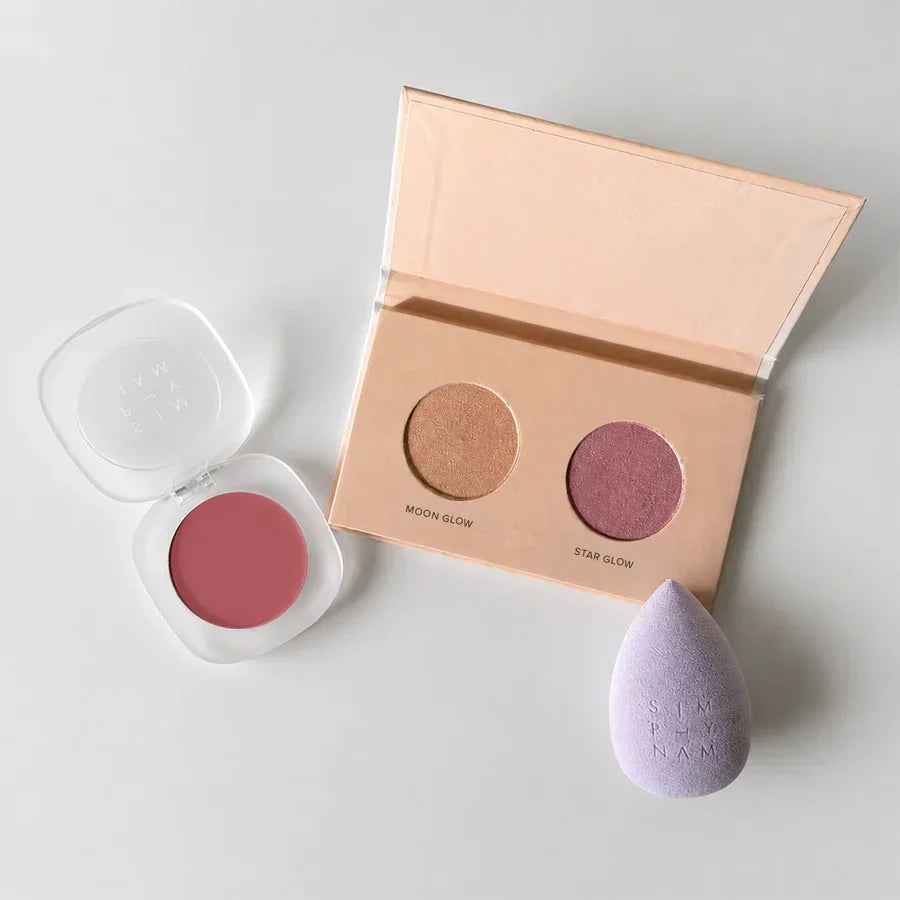
Apply a light layer of this shade from your colour corrector palette on the concern area and blend it using the Simply Nam Pro Microfibre Makeup Sponge or use a blending brush. Green colour corrector also helps neutralise the appearance of blemishes and acne marks. This shade is considered best for light to medium skin tones.
Orange colour corrector
Used to neutralise dark circles, this is the most commonly used shade in most colour corrector palettes. Whether it’s doom scrolling till the wee hours, binge-watching your fave show, sleep deprivation or stress, count on a trusty orange colour corrector to get the job done!
This shade of colour corrector also works well in concealing blemishes and dark spots and is considered best for medium to dark skin tones.
Peach colour corrector
This shade does the same thing as its orange counterpart but is considered best to use for light or fair skin tones.
A peach colour corrector helps neutralise the look of dark circles and blemishes on fair or even medium skin tones, as orange can look jarring or blotchy on lighter skin tones.
Yellow colour corrector
Any sort of discolouration like bruises, birthmarks, or scars can be concealed using a yellow colour corrector. If your bruises or veins have a hint of purple, then yellow is the shade to reach out for on your colour corrector palette.
If your dark circles look slightly brown or have mild redness, then a yellow colour corrector can work wonders to even out your skin tone. For deeper skin tones, yellow can help brighten the skin tone too.
Purple colour corrector
A lavender or purple colour corrector is ideal for brightening dull skin or cancelling out yellow undertones. For days when your skin is looking too dull, lacklustre, and in need of that extra highlight, a lavender or purple colour corrector is sure to come to your rescue.
These colour corrector shades are the most commonly used across all skin tones. However, when investing in a colour corrector palette, ensure you analyse the needs of your skin tone too.
Step By Step Colour Correcting Routine
Now that you’ve got the basic idea of colour correcting and the shades to use, follow this step-by-step guide to accommodate it into your makeup routine.
Step 1: Skin Prep
Start your routine with a freshly cleansed face. Moisturise it well, and follow it up with a suitable primer for your skin. This is the most essential step in ensuring your makeup goes onto your face as smooth as butter.
Step 2: Colour Correcting
Pick your colour corrector, and lightly apply it to the concern area. Keep it light enough to make sure it doesn’t look too obvious on the skin, and buildable enough to even out your skin tone.
If you’re colour correcting a bigger area like the cheeks, we recommend using a blending brush or use a concealer brush for smaller areas.
If you wish to keep it simple then just stick with the Simply Nam Pro Microfibre Makeup Sponge that will help blend your product seamlessly on big or small areas of the face.
Step 3: Go In With Foundation
Now move on with your regular base products. Use a foundation, BB cream, CC cream, tinted moisturiser or sunscreen, depending on the coverage & finish you’re looking for. Blend it out evenly to smoothen out the base.
Step 4: Dot On Your Concealer
If your colour corrector didn’t completely get the job done, go in with a dot or two of your concealer to neutralise it. Or simply use the concealer to highlight or brighten your skin’s appearance.
Step 5: Set With Powder
This set is as essential as prepping your skin before your products go on. Set your base with a setting powder to ensure everything stays in place for long hours.
Since you’ve got a lot going on in your base, it’s best to set it with powder to make sure it stays put. Follow up with the rest of your makeup routine after.